

Right On Time
Lauryn Hill and the Art of Black Musical Memorial

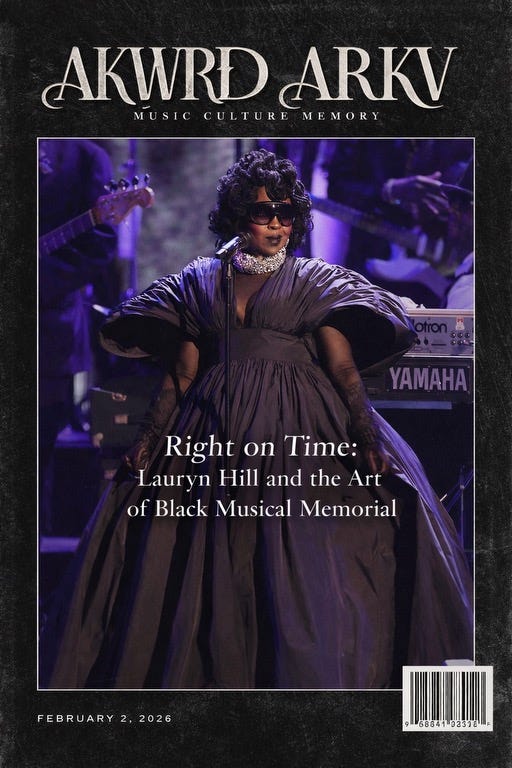
In recent years, the name Lauryn Hill has become somewhat synonymous with time. Folks debate whether or not to attend her concerts, weighing the experience against her reputation for not showing up on time. But this past Sunday at the 2026 Grammy Awards, the only question surrounding time, as it pertained to Thee Lauryn Hill, was wishing we had more of it.
For 11 minutes and 59 seconds, time stood still.
Lauryn Hill led a Black, star studded tribute honoring fallen musical legends Roberta Flack and D’Angelo, one that transcended eras, genres, and grief itself. As the pain of loss was strummed with gentle fingers and the words of their lives were placed before us to sing, the room became sacred. On the first day of Black History Month, no less.
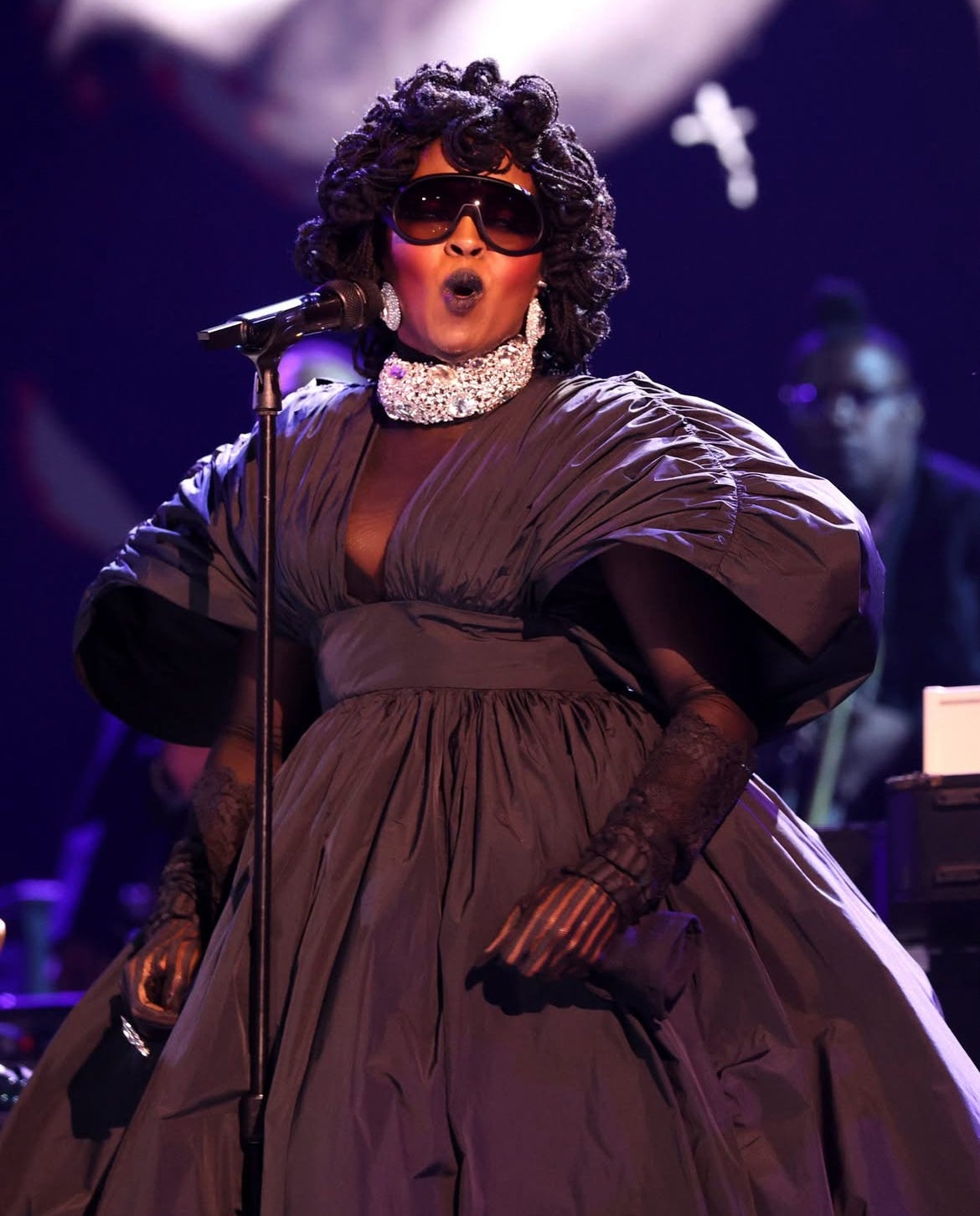
Led by Lauryn, and supported by an ensemble that included Bilal, Lucky Daye, Raphael Saadiq, Leon Thomas, Jon Batiste, Anthony Hamilton, John Legend, Chaka Khan, Lalah Hathaway, October London, Leon Bridges, Olivia J, and Wyclef Jean, the tribute offered the ultimate lesson in how to properly honor Black legacy, artistry, and lasting impact.
The tribute opened with D’Angelo’s band, The Vanguard, playing “Nothing Even Matters” as background vocalists harmonized. Lauryn stepped forward and spoke:
“D and I never got to do this on stage together. Make time for the people you love, while you can…”
She then transitioned seamlessly into the duet made famous by the pair in 1999. As her verse drifted away, D’Angelo’s voice poured from the speakers, heavy with emotion, grounding the tribute immediately.
“Brown Sugar” followed, with Lauryn introducing Lucky Daye, who delivered a restrained yet powerful rendition. Raphael Saadiq was next. Before singing “Lady,” he paused to honor his brother D’Wayne Wiggins of Tony! Toni! Toné! and Angie Stone, two more giants we lost last year. Saadiq, who produced “Lady” for D’Angelo in 1996, offered a version only he could, intimate, knowing, and full circle.
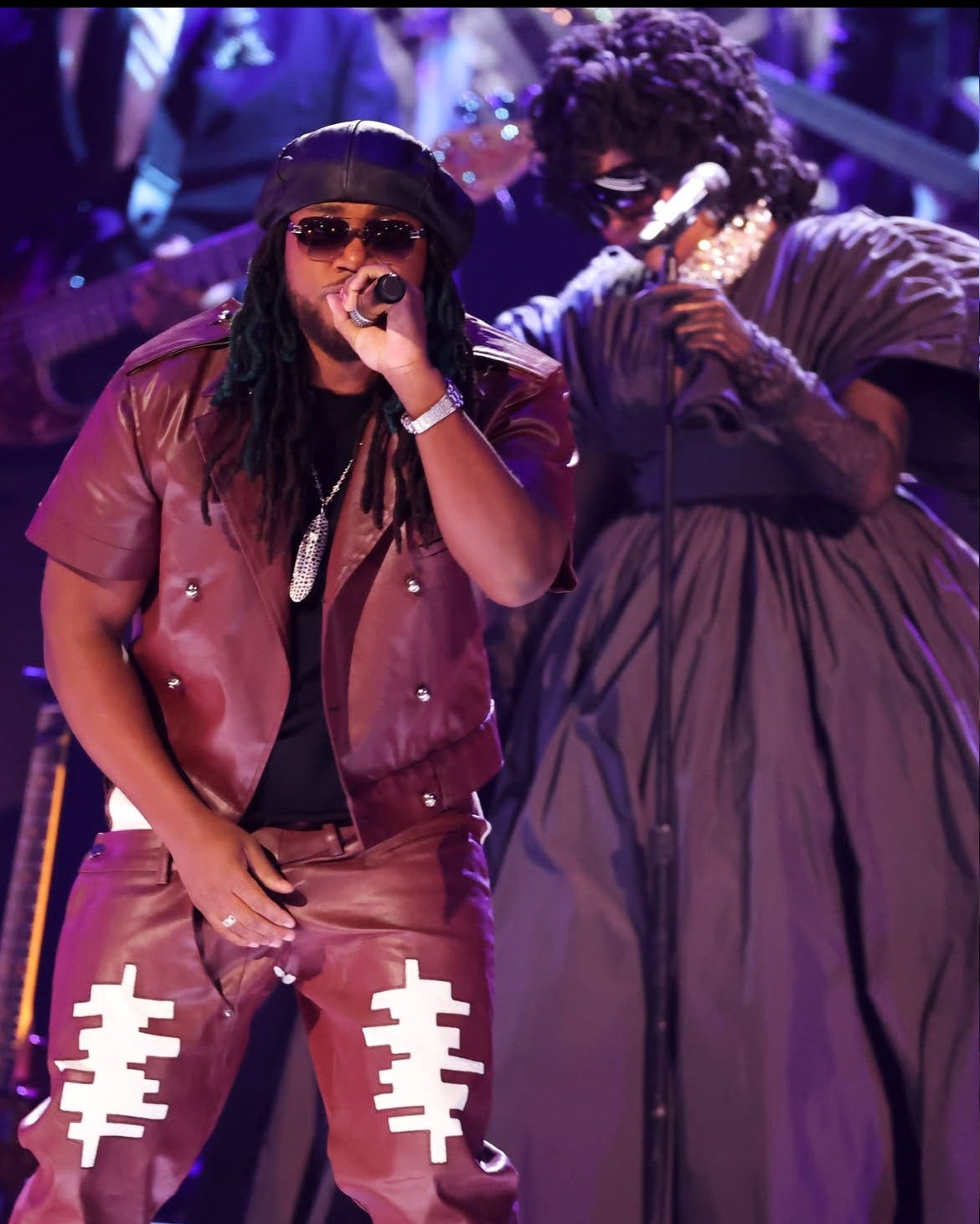
The Vanguard transitioned into “Devil’s Pie” as Leon Thomas joined Lauryn to deliver the hook. Anthony Hamilton’s rich Southern tenor emerged next with “Another Life,” followed by Bilal, Philly’s own, who walked onstage and left no crumbs. Ten toes down, he made the song his own while preserving its soul, his voice climbing and diving up and down the scale chart.
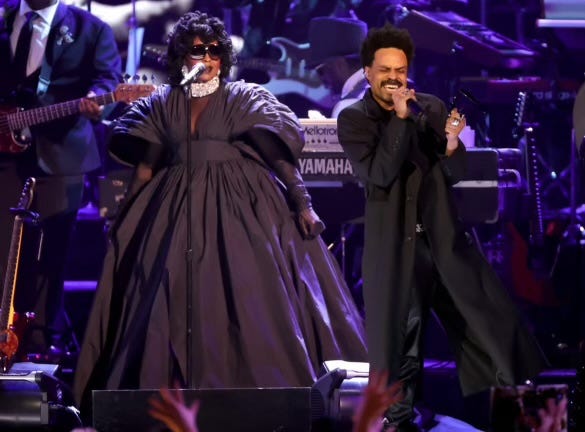
Jon Batiste closed the D’Angelo portion with “Africa,” bringing that chapter to a close.
Lauryn returned to center stage to begin the Roberta Flack tribute with “The First Time Ever I Saw Your Face.” She sang it traditionally, until the ending. For those with an ear for music, Lauryn slipped in a subtle but profound homage, closing with the Total Praise riff, honoring yet another fallen Black musical giant, Richard Smallwood.
Leon Bridges, Jon Batiste, and Olivia J followed with a vibey rendition of “Compared to What.” October London and Lalah Hathaway, Donny Hathaway’s daughter, carrying that anointed lineage, performed “The Closer I Get to You”
Chaka Khan, John Legend, and Marcus Miller on bass delivered a soulful take on “Where Is the Love.”
Then Lauryn did what only she could do.
She led “Feel Like Makin’ Love,” blending Roberta Flack’s version with D’Angelo’s version, The Vanguard and background singers crushing every moment. And then she called out,
“Where’s Wyclef Jean?”
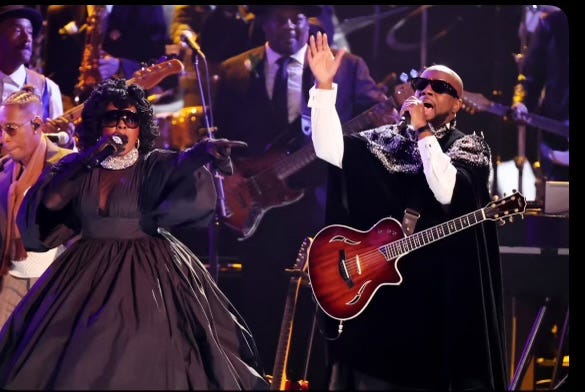
The camera panned as Wyclef walked down the aisle, bass in hand, meeting Lauryn center stage. She began with Roberta’s version of “Killing Me Softly With His Song,” and in one of the smoothest transitions ever, the performance shifted into the Fugees’ 1996 version. The crowd rose instantly, singing in full voice as every performer returned to the stage.
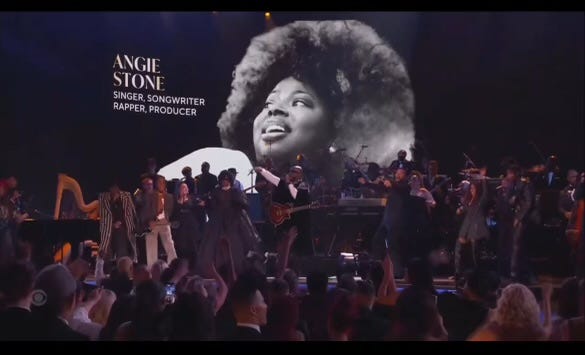
Behind them, a montage of music legends flashed.
As the song ended, The Vanguard shifted tempo. The entire stage joined in the Amen ending modulation of Richard Smallwood’s “Total Praise.” And just like that, it was over.
Spirits full. Good ole Black singing had been done. Love conveyed. Legacies honored.
Lauryn stood at the center of it all. She directed the tribute herself, not the Grammys’ producers. She received the invitation and chose to share the stage with R&B powerhouses she hand picked to honor Roberta Flack and D’Angelo properly.
At the 11 minute and 39 second mark, Lauryn motioned to The Vanguard for the final transition. She was visibly full, her voice slightly shaky, but she held on long enough to land the ending. She sealed the moment with an Amen, then softly declared,
“We love you, Roberta.
We love you, D’Angelo.”
She turned slowly, smiling and bowing to each performer, offering gratitude in every direction.
Lauryn Hill is still synonymous with time, but on this night, she gave us exactly what we needed, exactly when we needed it.
RIGHT ON TIME.
Thank you, Ms. Hill.